
Ask someone to name the fastest animal on Earth and you'll get the same answer almost every time: the cheetah. Fair enough, that's the right call for land animals, but the full story is a lot more interesting. This list includes an animal that can barely walk backwards, one that's up and running within minutes of being born, and a runner whose real talent isn't top speed at all, it's something most people never think to ask about: stamina.
- The cheetah is the fastest land animal in the world, but it is not the fastest animal overall. That title goes to the peregrine falcon, which can top 200 mph in a hunting dive, far beyond anything that runs on the ground.
- The pronghorn, the second fastest land animal, tops out around 55 mph, a bit slower than the cheetah, but it wins on endurance: it can hold a very fast pace for several miles, while a cheetah overheats after just a few hundred yards.
- Several animals on this list, like the blue wildebeest and the European hare, are born already built to run, a survival trait common among species that live out in the open with no burrows to hide in.
| Rank | Animal | Top speed | Standout trait |
|---|---|---|---|
| 1 | Cheetah | up to 75 mph (120 km/h) | Fastest land animal in the world, but only for seconds |
| 2 | Pronghorn | 55 mph (89 km/h) | Best high speed endurance of any land animal |
| 3 | Springbok | 55 to 56 mph (88 to 90 km/h) | Performs pronking, vertical jumps over 6 feet high |
| 4 | Blue wildebeest | 50 mph (80 km/h) | Weighs 600 pounds and drives the great African migration |
| 5 | Lion | 50 mph (80 km/h) | Hunts through stealth, not stamina |
| 6 | Blackbuck | 50 mph (80 km/h) | Clears jumps taller than an adult human mid run |
| 7 | American Quarter Horse | 48 mph (77 km/h) | The fastest horse breed over a short sprint |
| 8 | European hare | 45 mph (72 km/h) | Ready to outrun predators almost from birth |
| 9 | Greyhound | 43 mph (69 km/h) | The fastest dog breed in the world |
| 10 | Kangaroo | 44 mph (71 km/h) | Saves energy thanks to tendons that work like springs |
10. Kangaroo (Macropus): speed that saves energy
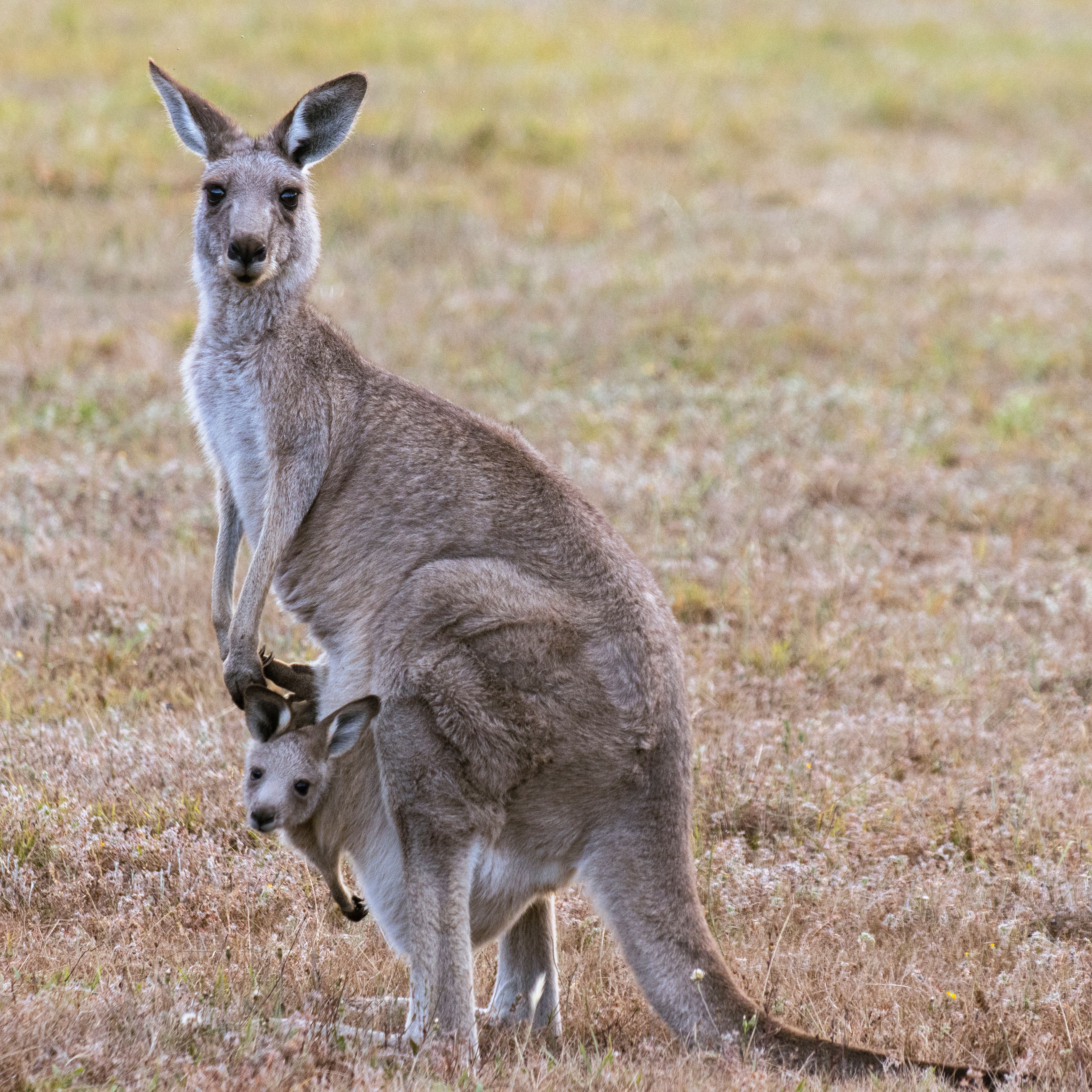
A kangaroo can hit about 44 mph, but it doesn't move like anything else on this list. Instead of running, it covers ground in hops that sometimes stretch past 20 feet, basically clearing the length of a car and a half in a single bound. The faster it goes, the less energy it burns per hop, because its tendons work like natural springs: they store energy on landing and release it right back on the next jump.
At a slower pace, a kangaroo uses its tail almost like a fifth limb, pushing off it while its back legs swing forward. There's also a pretty stubborn myth that kangaroos can't walk backwards at all. The truth is a bit more nuanced: the shape of their hind legs and that heavy tail make it extremely hard, though not a hundred percent impossible in every case. And if a predator does manage to corner one, a kangaroo has one more trick up its sleeve, they're surprisingly strong swimmers and will sometimes head into the water, where they can fend off an attacker with their powerful front legs.
9. Greyhound (Canis lupus familiaris): the fastest dog breed in the world
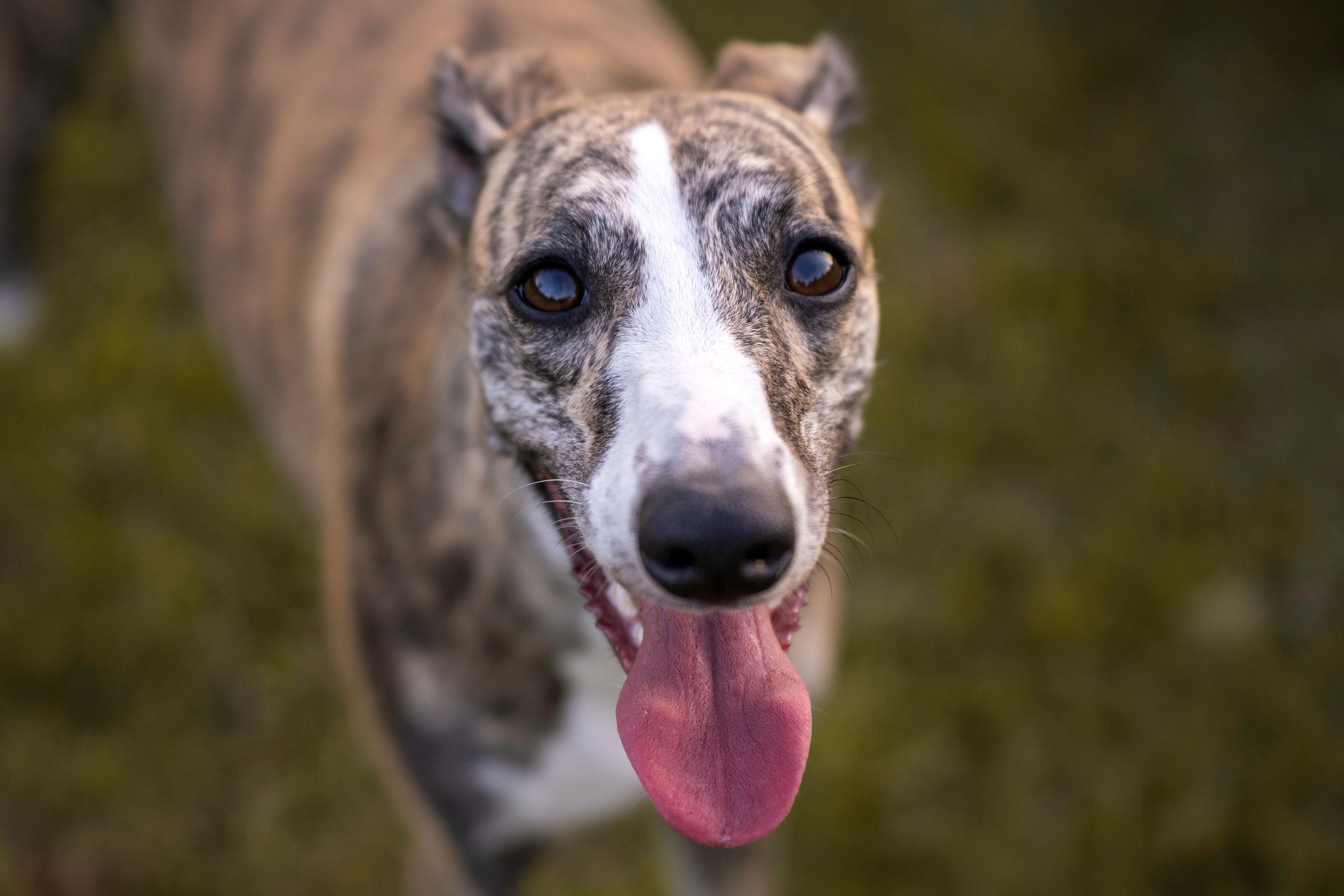
A dog on this list might seem out of place, but the greyhound is no ordinary house pet. At up to 43 mph, it's the fastest dog breed on the planet, and its body looks like it was built by someone obsessed with aerodynamics. At full stride, a greyhound actually goes fully airborne twice per stride, for a split second none of its paws touch the ground at all.
Speed isn't its only advantage either. A greyhound's field of vision stretches close to 270 degrees, making it easy to spot movement almost anywhere around it. Here's a fact most people don't know: a lot of greyhounds carry a blood type that's in high demand for canine transfusions, so they're often used as blood donors for other dogs. And since a greyhound's neck is wider than its head, owners usually fit them with a martingale collar, designed specifically so the dog can't slip out of it mid sprint.
8. European hare (Lepus europaeus): ready to run at birth

At a glance you might mistake it for a rabbit, and that would be a pretty big mistake. European hares are born fully developed, with fur and open eyes, ready to face the world almost immediately, because their whole life is basically one long escape act from predators.
Thanks to their long back legs, they can reach 45 mph, which means clearing a football field in about five seconds. Their other weapon is an almost instant change of direction, one that forces foxes and other hunters to constantly correct course mid chase. Those famous hare boxing matches, long assumed to be males fighting each other, usually turn out to be females fending off overly persistent suitors with quick jabs of their front paws. And unlike rabbits, hares don't live in burrows at all, they spend their lives out in the open, resting in small depressions in the ground and relying almost entirely on camouflage.
7. American Quarter Horse (Equus ferus caballus): king of the short sprint
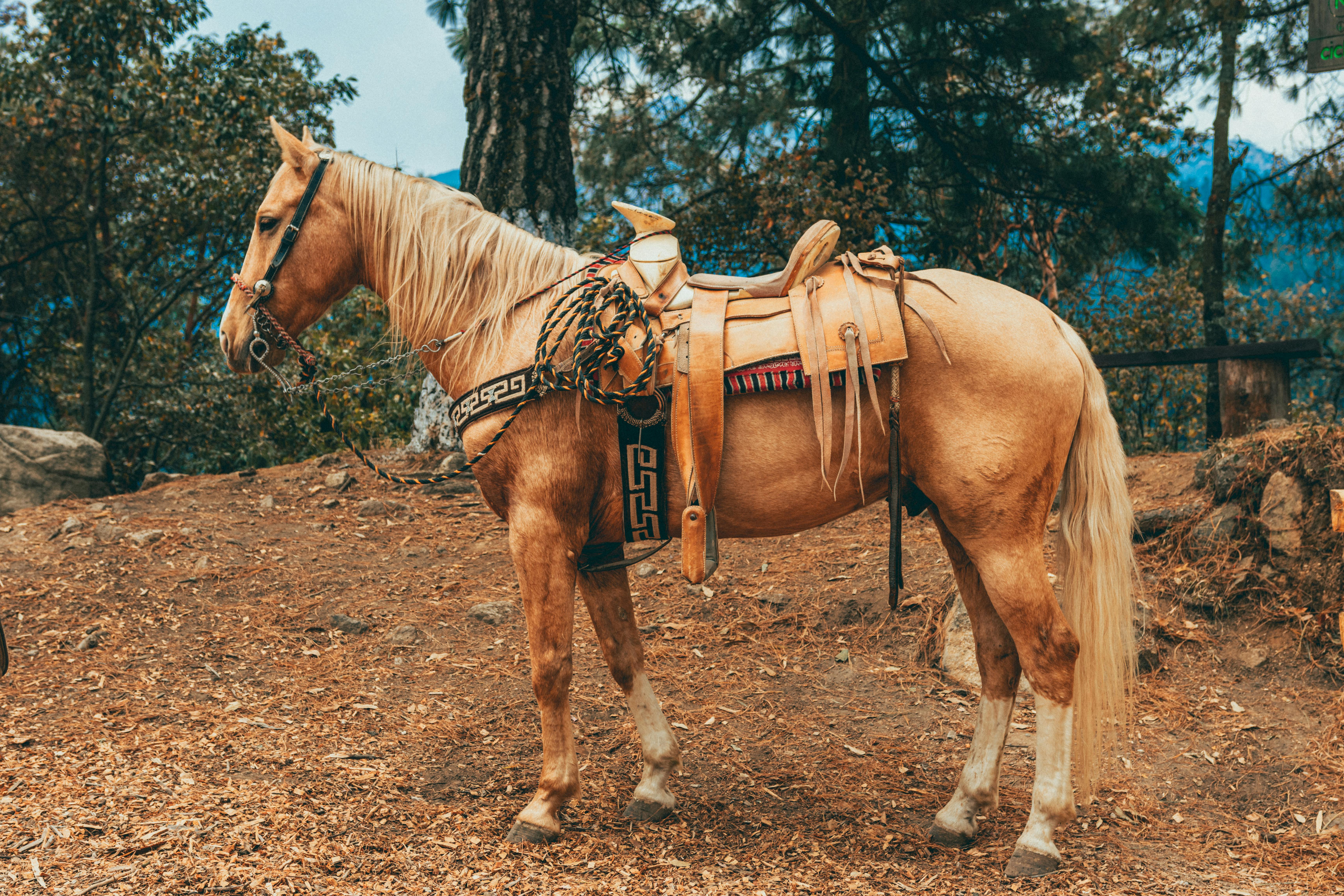
This breed was selected over centuries with one very specific goal in mind: covering a quarter mile faster than any other horse. And it shows, an American Quarter Horse can reach 48 mph within seconds, an acceleration a lot of experts compare to a sports car peeling off the line.
While most animals need time to build up to top speed, this horse is nearly at full speed from the jump. A massive lung capacity and a heart built to pump large volumes of oxygenated blood get that power to its legs fast, which is exactly why the breed dominates short races. Interestingly, behind all that explosive power is usually a pretty calm temperament, which is also why the breed is so popular for ranch work and equestrian competition.
6. Blackbuck (Antilope cervicapra): jumps higher than a grown adult
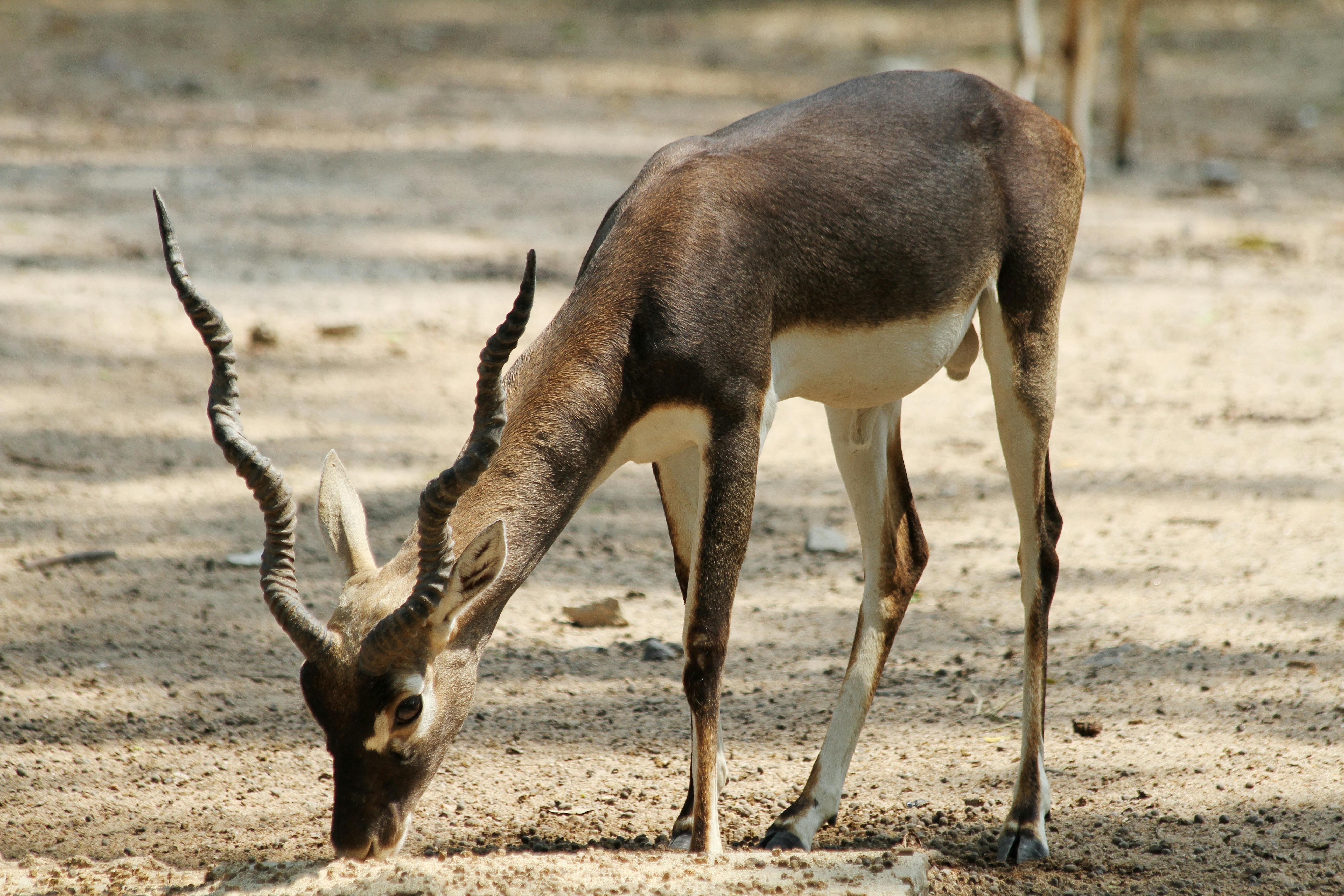
Out on the plains of India lives one of the most graceful runners in the animal kingdom. The blackbuck combines speed, agility, and huge leaps into a single survival strategy, reaching about 50 mph, roughly the speed of a car cruising down a country road.
What's really impressive is how it uses that speed. While running, a blackbuck pulls off jumps that easily clear the height of a full grown person, not just to dodge obstacles but also to signal to other blackbuck that it's in top physical shape. Males stand out with spiraled horns that can reach almost 28 inches, used in fights over territory and mates. But when a predator shows up, running is still the best defense, and wolves, jackals, and even some big cats have a hard time keeping pace with this runner.
5. Lion (Panthera leo): speed built for the ambush
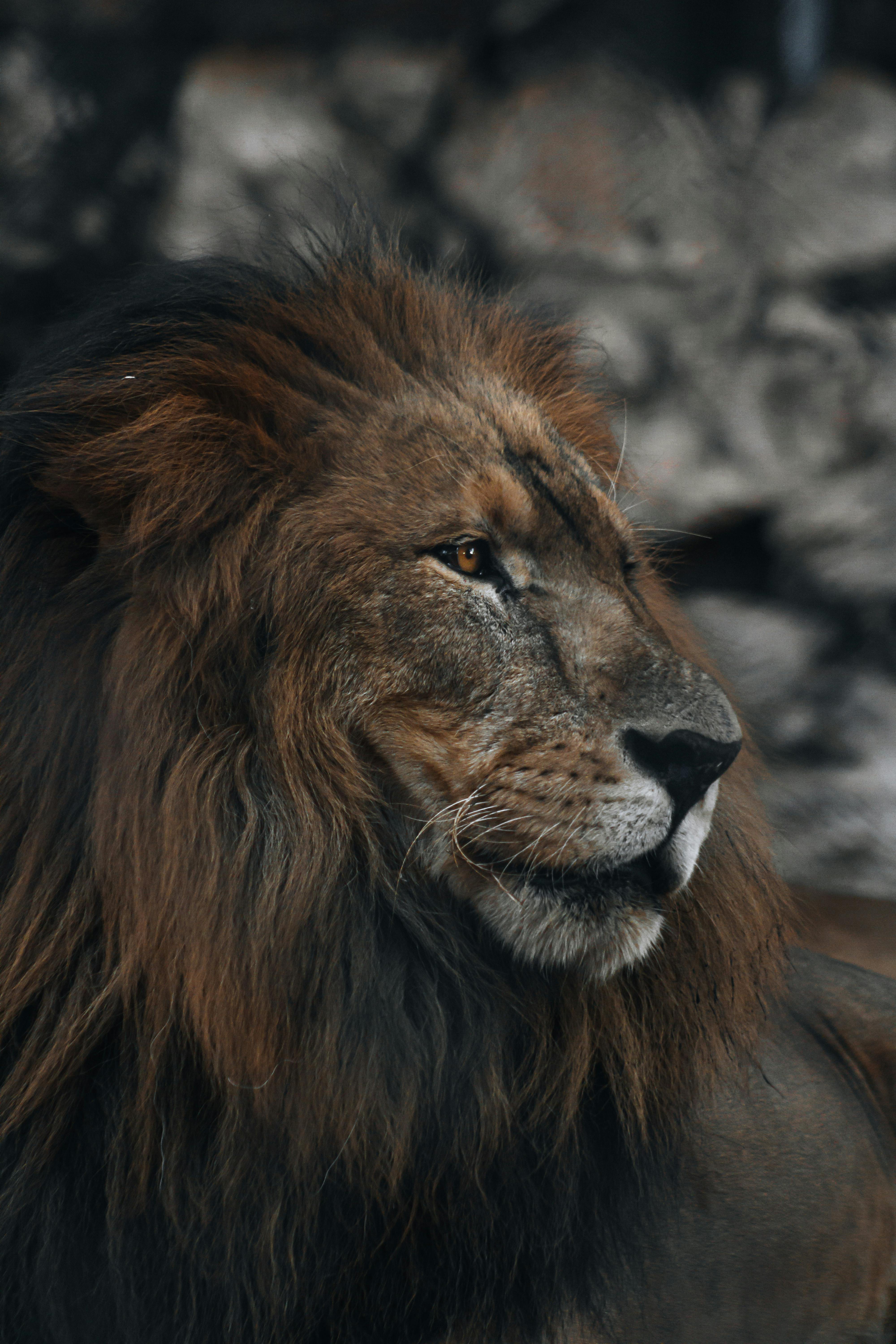
Few animals command as much respect as the lion, whose sheer bulk makes it easy to assume it can't be all that fast. During a short chase, though, a lion can hit 50 mph, enough to cross a football field in a few seconds.
Unlike the cheetah, a lion isn't built for long chases. Its strategy is to close in unseen and strike once prey has no time left to react, which is exactly why its paw pads let it move almost silently while cutting the distance step by step. And while people tend to picture the male as the great hunter, it's actually the lionesses who handle most of the pride's hunting, working as a team, coordinating, surrounding prey, and attacking from multiple angles at once. An adult lion can also cover more than 30 feet in a single leap, plenty to catch prey off guard that thought it had already escaped. Its roar carries for miles, marking territory and keeping the rest of the pride connected.
4. Blue wildebeest (Connochaetes taurinus): 600 pounds at a lion's pace
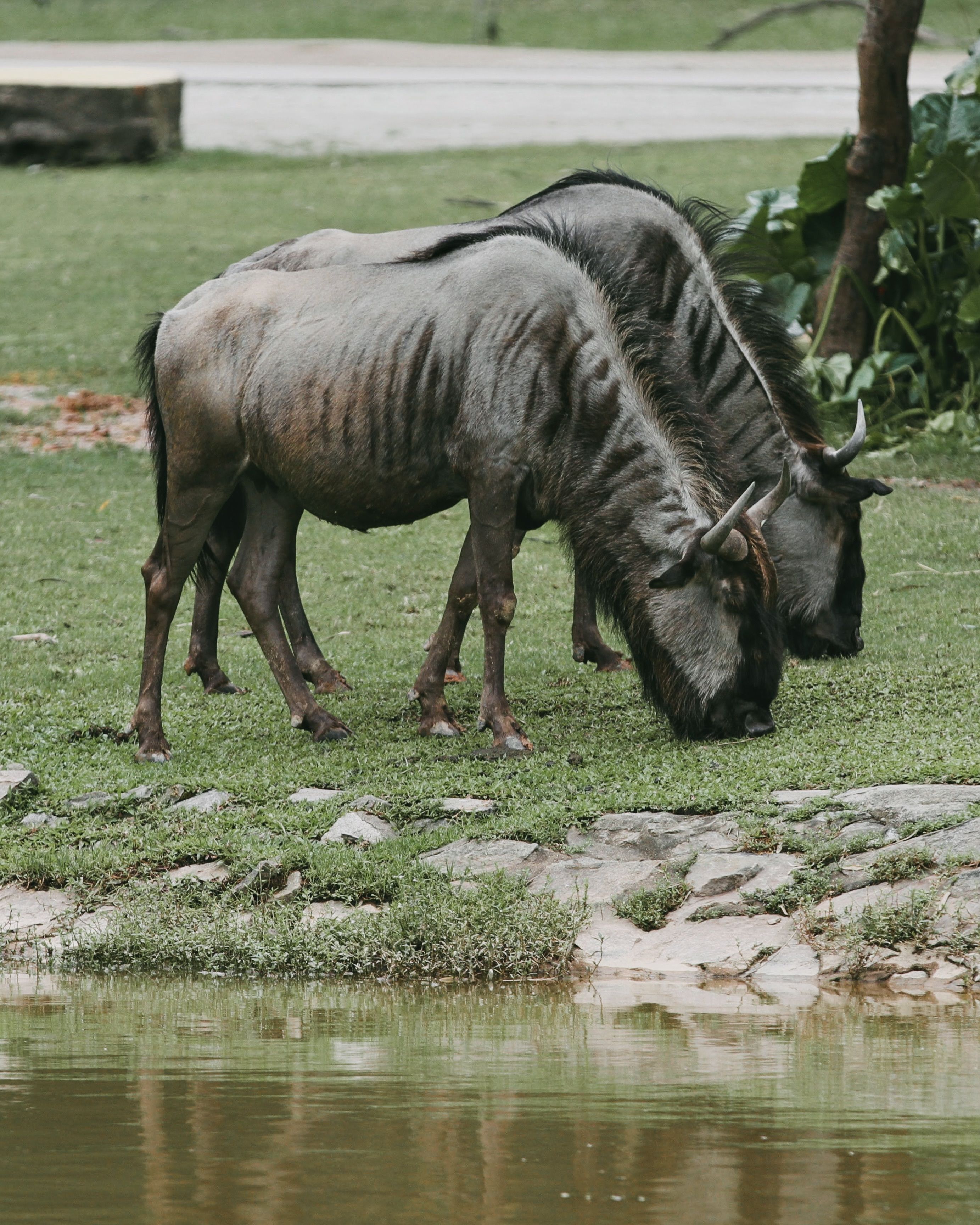
If you had to guess the least likely animal to show up on this list, the wildebeest would probably be it. Its heavy body, oversized head, and bulky build all suggest slow. The reality is completely different, an adult blue wildebeest can hit 50 mph, the exact same top speed as a lion, at a weight of around 600 pounds, more than three times heavier than the average adult human.
An animal that size coming at you at city driving speed is enough to make most predators think twice before going after a healthy adult. And that speed isn't only for fleeing, wildebeest also put it to use in devastating charges when they run out of other options. But maybe the most incredible fact happens right after birth, calves are up on their feet within minutes and running not long after, because there's no such thing as a peaceful childhood on the African savanna, every extra minute spent standing still raises the odds of becoming breakfast for a lion, hyena, or leopard. Every year, more than a million wildebeest take part in one of the most spectacular land migrations on the planet, covering hundreds of miles chasing rain and fresh grass, crossing crocodile infested rivers and predator packed territory the entire way, because their survival depends on never stopping.
3. Springbok (Antidorcas marsupialis): the antelope that jumps mid sprint
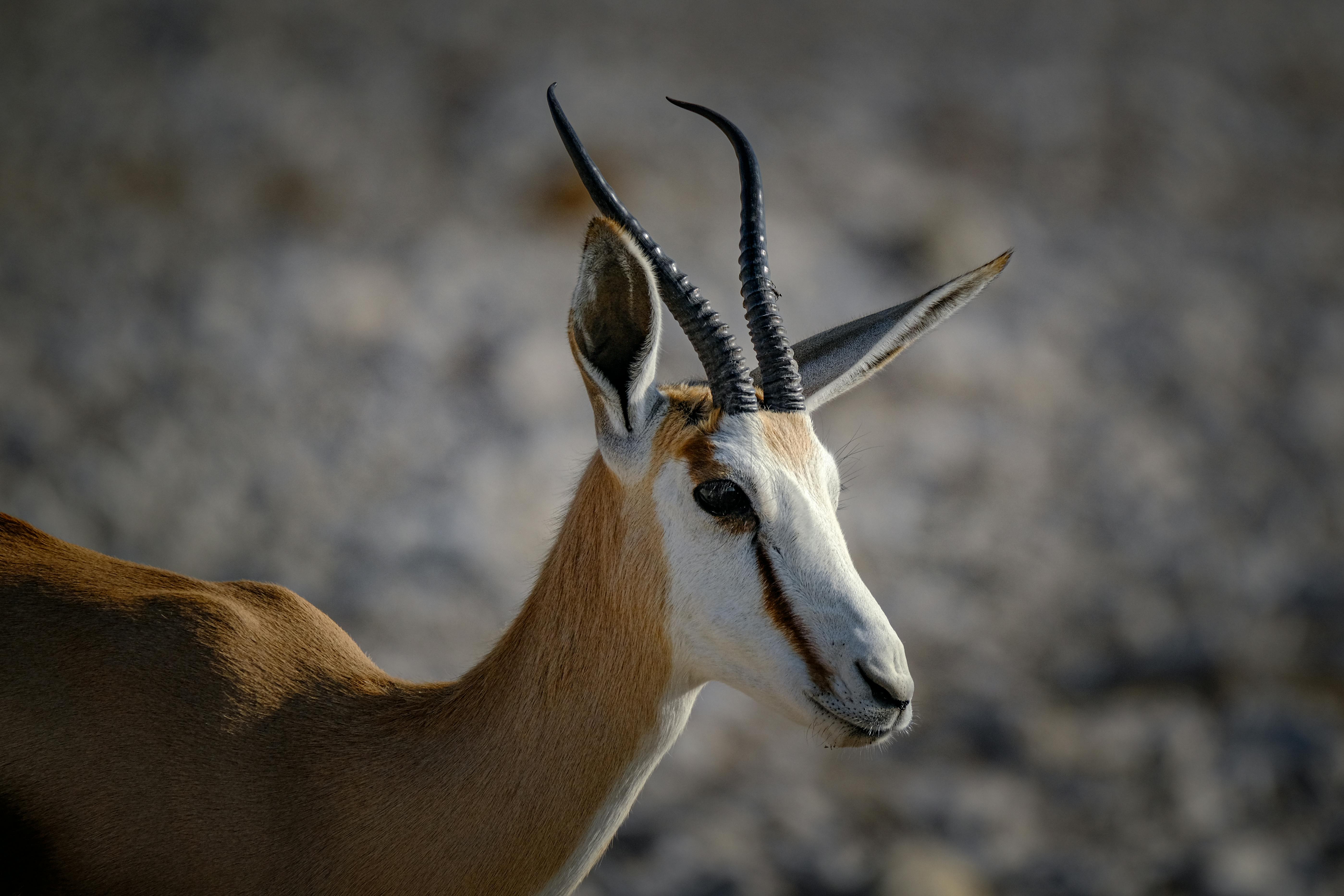
The springbok is one of the most agile antelope in Africa, reaching about 55 to 56 mph, fast enough to outrun most predators on the savanna. At that speed it would clear a football field in a little over four seconds. But the real show happens while it's actually running.
Out of nowhere, it starts pulling off completely vertical jumps, a behavior known as pronking. It can clear more than six feet off the ground with its legs held perfectly stiff. Why waste energy jumping while something is actively chasing you, that question puzzled researchers for years. Today the leading idea is that these jumps send a message to the predator: I'm healthy, I'm strong, chasing me would be a waste of time, basically the animal kingdom's version of "don't even bother." And it works more often than not, since predators tend to focus their energy on weaker animals instead. One more remarkable trait, its ability to survive long stretches in extremely dry terrain, getting much of the water it needs straight from the plants it eats, which cuts way down on its need for rivers or watering holes.
2. Pronghorn (Antilocapra americana): the real endurance champion

For a long time the pronghorn was treated as just another antelope, even though it isn't even in the same family as African antelope, which already makes it a bit of an oddball. It can hit close to 55 mph, but that number isn't actually why it lands in second place on this list.
What's genuinely remarkable is that it holds a very high speed over distances that would leave nearly every other animal on this list completely wiped out. While a cheetah can barely sustain its top speed for a few hundred yards before overheating, a pronghorn can keep up a similar pace for several miles. Think of it as comparing a Formula 1 car to a dedicated marathon runner, one accelerates harder, the other simply never stops. What makes that possible is a heart that's enormous relative to its body size, along with exceptionally large lungs and a very wide windpipe, letting it pump huge volumes of oxygen to its muscles while running. Its whole body is built around endurance.
There's an even more fascinating piece to this story, that extraordinary speed almost certainly evolved as a response to a predator that no longer even exists. Thousands of years ago, North America was home to the American cheetah, an incredibly fast predator that eventually went extinct. Its rival disappeared, but the pronghorn held onto that remarkable ability anyway, as if it's still preparing for a chase that ended countless generations ago. It also has excellent eyesight, able to pick up movement from miles away and spot danger long before any other animal on the plains even notices it's there.
1. Cheetah (Acinonyx jubatus): the fastest land animal in the world
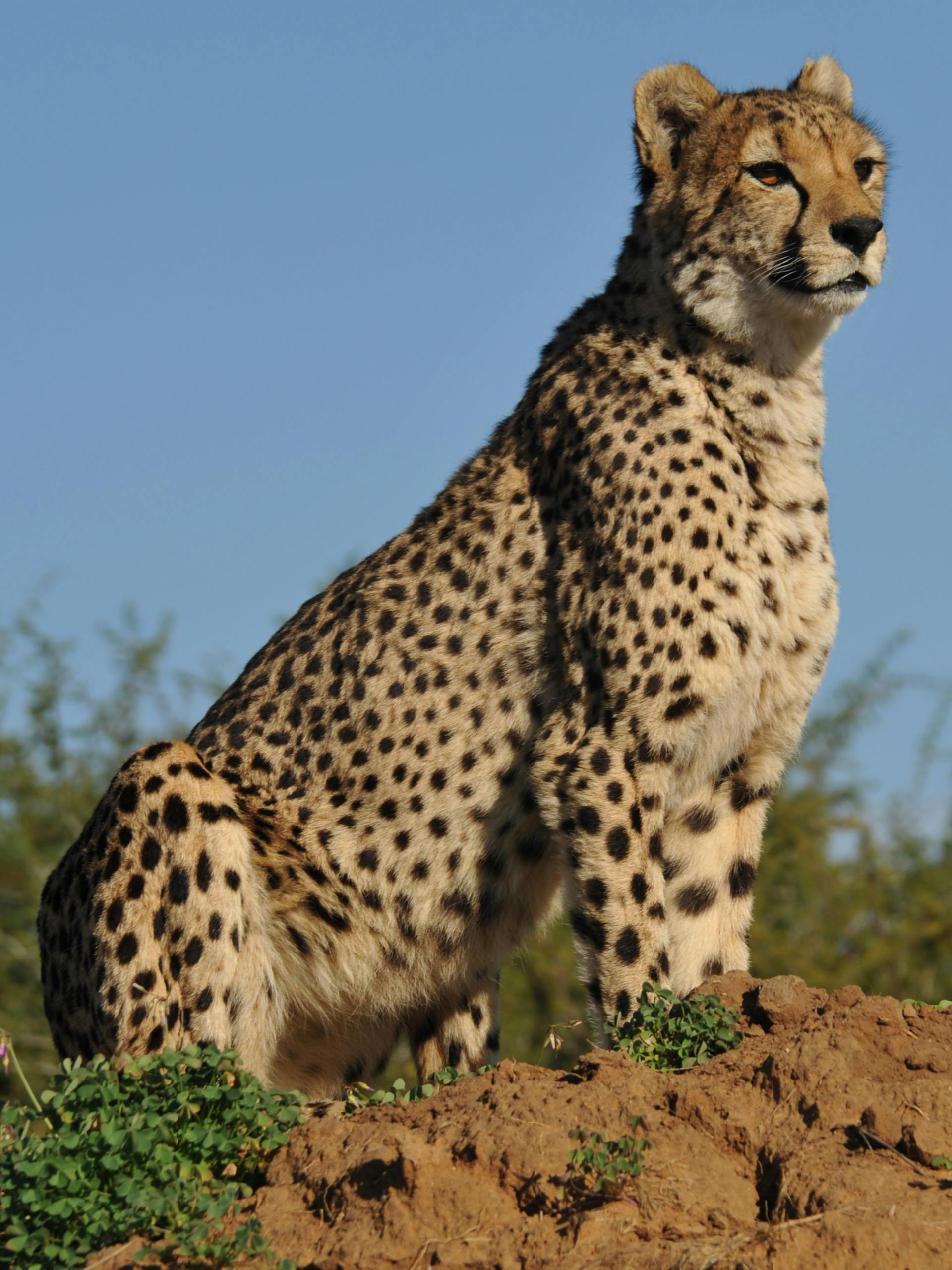
Here's the undisputed champion, the cheetah. No other known land animal has ever beaten its top speed, close to 75 mph, roughly the speed limit on plenty of highways. Picture an animal accelerating that fast with absolutely no engine involved.
What's most surprising is how quickly it gets there, going from a standstill to nearly 60 mph in just a few seconds, an acceleration a lot of experts compare to high performance sports cars. But here's the big paradox of the cheetah, despite being the fastest runner on the entire planet, it simply cannot hold that speed for very long. Its chases usually last under a minute, and if the prey survives those first few seconds, its odds of getting away go up considerably. That's exactly why every single attack has to be planned with real precision.
Before breaking into a sprint, a cheetah closes in slowly, using tall grass as cover. Only once it's close enough does the explosive acceleration kick in, and while it's running something almost unbelievable happens, its spine works like a giant spring, flexing and extending with every stride. That's what lets it cover close to 23 feet per stride, meaning it could cross an entire football field in around fifteen strides. Its long tail plays a huge role too, acting like an airplane rudder and helping it keep its balance through sharp turns mid chase.
One detail that surprises a lot of people, unlike lions or tigers, a cheetah can't roar at all. Instead it makes sounds closer to purring, chirping, and short high pitched calls, mostly used to communicate with its cubs. Every part of its body is built around a single goal, catch the prey before the energy runs out.
And that's exactly the most surprising takeaway from this whole ranking, speed alone rarely guarantees success. Some animals bet everything on explosive acceleration, others on endurance, others on agility, and some simply survive by making the right call at exactly the right moment.
Frequently asked questions about the fastest animals in the world
What is the fastest land animal in the world?
The cheetah (Acinonyx jubatus) is the fastest land animal in the world, reaching close to 75 mph (120 km/h) in short bursts. It can only hold that speed for a matter of seconds, though, since its body overheats fast, which is why a cheetah's hunt usually wraps up in under a minute.
What is the fastest animal in the world, cheetah or peregrine falcon?
If you look beyond land animals, the peregrine falcon beats the cheetah. In a hunting dive it can top 200 mph, far beyond anything that runs on the ground. The cheetah still holds the title among land animals, so which one "wins" really depends on how you phrase the question.
What is the second fastest land animal in the world?
The pronghorn, native to North America, is the second fastest land animal, topping out around 55 mph. Its real advantage isn't top speed, it's stamina, a pronghorn can hold a very fast pace for several miles, something neither the cheetah nor the springbok can pull off.
Why can't cheetahs run for long distances?
A cheetah's body is built for explosive acceleration, not endurance. At top speed its body temperature spikes fast, so it has to break off the chase within a minute or risk overheating. That's why every hunt has to be planned with a lot of precision before the sprint even starts.
What is pronking in springbok?
Pronking is the name for the stiff legged vertical jumps a springbok performs while fleeing a predator, sometimes clearing more than six feet in the air. It signals to the predator that the springbok is healthy and strong, making a chase a waste of energy.
What is the fastest dog breed in the world?
The greyhound is considered the fastest dog breed in the world, capable of reaching about 43 mph. Its aerodynamic build and a field of vision close to 270 degrees make it a natural sighthound, built to spot and chase movement at a distance.
Can kangaroos walk backwards?
Not really, under normal circumstances. The structure of their hind legs and their heavy tail make moving backwards extremely difficult for a kangaroo, though it is not a total impossibility in every case.
How much does a blue wildebeest weigh and why is its speed surprising?
An adult blue wildebeest weighs around 600 pounds, yet it can still hit 50 mph, the same top speed as a lion. That's surprising because a body that heavy and bulky doesn't usually suggest that kind of acceleration, something pretty rare among large animals.
What animals are born already able to run?
The blue wildebeest and the European hare are two good examples. Wildebeest calves are up on their feet within minutes and running with the herd soon after, while hares are born with fur and open eyes, ready to flee predators almost from the moment they're born. It's a classic survival strategy for animals that live out in the open with no burrows to retreat to.


No comments:
Post a Comment